§04 · HOW EACH WINNING CONCEPT EXPANDS
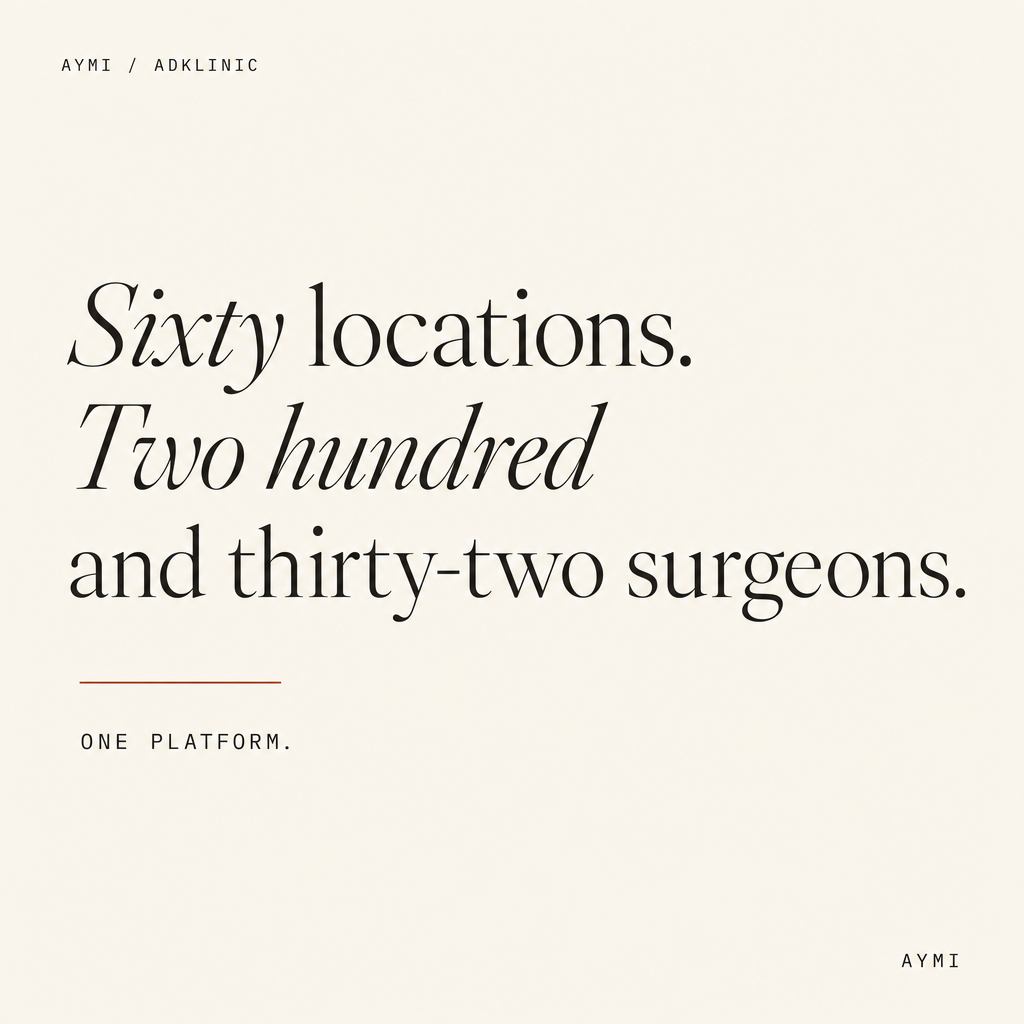
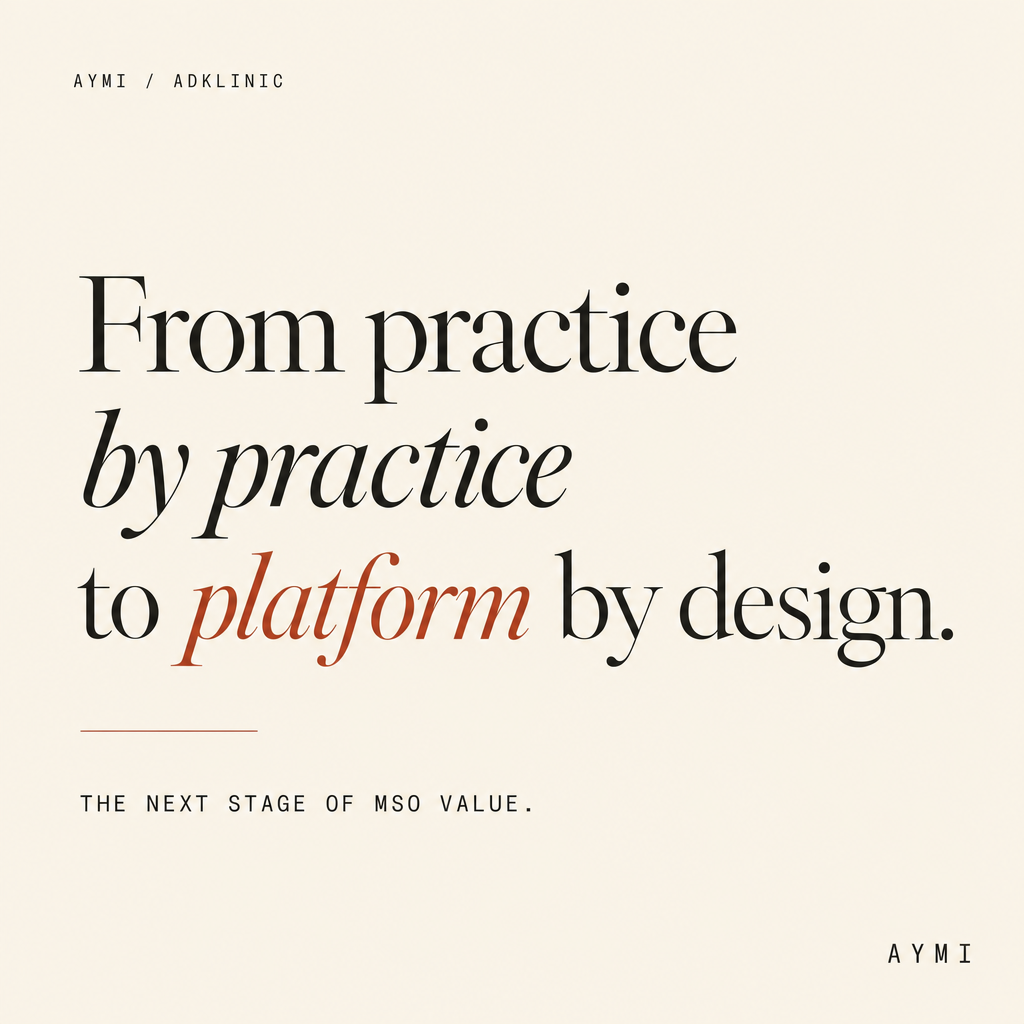
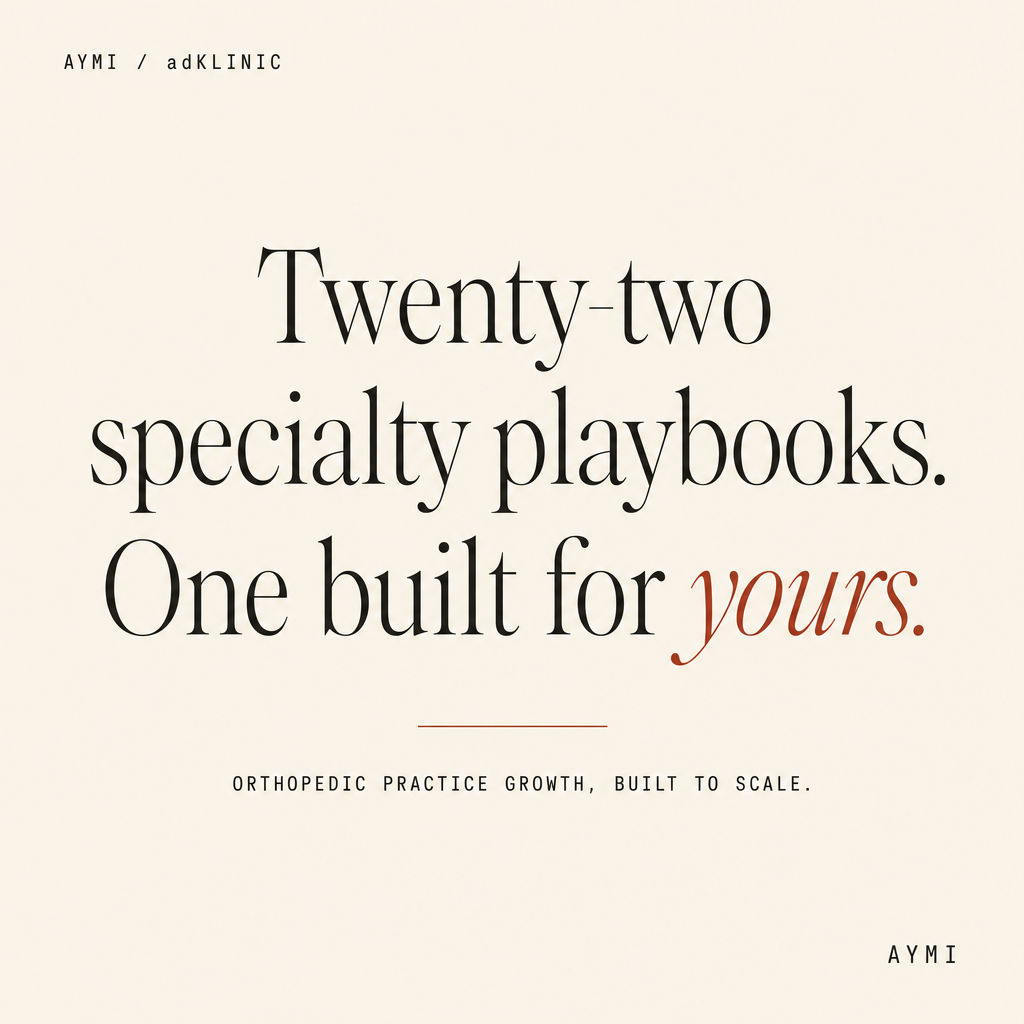
One frame in the preview. ~24 production assets per winner.
The previews above are 1:1 masters. The production-ready version of each winning concept is a four-placement set with headline, primary-text, and CTA variants — sized for Meta, LinkedIn, Google display, and a matching landing-page block.
The four-placement production set.
Every winning concept is built out to a four-placement set, sized to the surfaces actually running. Each placement carries the same headline (or a tuned variant), the same wordmark hierarchy, and a CTA matched to the destination. The system flexes; the integrity holds.
PLACEMENT 01
1:1 Feed
Meta feed and LinkedIn feed — the master format. 1080×1080 production assets, copy variants per subspecialty.
PLACEMENT 02
4:5 Feed
Meta primary feed placement. 1080×1350. Headline holds; subhead expands to take advantage of additional vertical space.
PLACEMENT 03
9:16 Story / Reel
Meta Stories, Instagram Reels, TikTok organic. 1080×1920 with a fully-animated text-staged version for the platforms that reward motion.
PLACEMENT 04
16:9 Landing Block
Matching block on the subspecialty landing page — message-match continuity from ad to LP, which is the CRO lever that defends spend.
Sample copy bank — production cycle.
For every winning concept, the production cycle produces 3 headline variants, 3 primary-text variants, and 2 CTA variants — a 3×3×2 matrix the platform can rotate against without re-rendering.
HEADLINE VARIANTS (Concept A2 example)
- Subspecialty matters. So does your insurance.
- The right surgeon. The right network. The right plan.
- Verified insurance. Booked consult. Same conversation.
PRIMARY TEXT VARIANTS (Concept A2 example)
- Book a consultation with a board-certified orthopedic surgeon in your city — and verify your coverage before the appointment.
- Subspecialty-trained surgeons across our network of practices. Insurance verification handled before your consult.
- Hand. Foot & ankle. Spine. Sports medicine. Joint replacement. Book with the subspecialty that matches your concern — and the surgeon who takes your plan.
CTA VARIANTS
- Book a consult
- Verify your coverage
PRODUCTION ANCHOR
All production frames anchor to verified UMP-platform copy and to schema-marked subspecialty landing-page destinations. No outcome claims appear on creative; any claim language is reviewed by counsel (Jessica Holland) before production.
SUBSPECIALTY FLEX
The 3×3×2 matrix is replicated per subspecialty — joint replacement, spine, sports medicine, hand, foot & ankle, sports surgery. Each subspecialty has its own audience logic, its own intent map, its own creative library.
MARKET FLEX
Every concept ships with a market-overlay variant — Atlanta, DFW (OrthoTexas), Denver — that brings the local market name into the headline without sacrificing the visual system.